Welcome to R. J. Thayer's Speculative Website 

This is the personal website of R. J. Thayer, who indulges in technical and speculative writing, as well as website administration. This website is generally intended to visualize the system dynamics of the American Constitution as a social covenant that a citizen agrees to if born and bred within it. Much of the speculation involves the gradual establishment of world covenants as well and why some societies regress into Mesolithic totalitarianism as a perceived survival mechanism.

This site contains material that is freely developed in a speculative mind set and R.J. reserves all of the rights attendant to speculative , note even really speculative, literary activity. Please keep in mind the site is also a 'work in progress' with the usual intellectual property rights and is used to test various website publishing modes.

 Revisions are as of 28 May, 2012 CE.

2nd Amendment, bearing of arms

Could the DC Armory be an example of a national weapons transfer and training site that satisfies all parts of the Second Amendment? Read more

Is Human Wellness a form of freedom or an economic process?

Pharaohs and Emperors rewarded their supporters with health care as an economic process, but at what point does wellness become a human or civil right?
Work in Progress 2012

A New Job for the office of  Vice President?

Does a Vice President sit around the Senate podium all day waiting for something to do?. More…

Allegiance to What?

The Pledge of Allegiance is endlessly repeated as a pledge to a 'flag'. OK, but perhaps it would be better to have a pledge of citizenship that all citizens must take to establish them as citizens? The 14th Amendment makes birth on American soil the criteria for automatic citizenship but why isn't that citizenship established by a legally binding oath of allegiance to the Constitution itself?  For many, the idea of adhering to a set of Constitutional rules is not why they came here.  As a 'what if',  suppose the pledge of allegiance was a binding condition of citizenship, thereby eliminating the occupation category 'CINO'?

  • POSSIBLY?:
    "As a conscious being of Creation, I do swear and affirm to uphold the responsibilities of citizenship and to protect the Constitution of the United States of America. I do swear and affirm that I will contribute as I am able to the common defense and general welfare of all citizens of the United States and to no other sovereignty. I swear and affirm my belief in the blessings of Constitutional liberty and democracy; that they establish domestic tranquility through justice. I swear to embrace those Constitutional rights and duties in my daily life with due respect for the rights of others not identified as enemies of the Constitution or the human race."

  • Is a Citizenship oath taken on Faith or is it a binding social contract between peoples trying to live together in 'domestic Tranquility'  as the Preamble states?


Constitutional Contempt.  An Article I, powers of the Congress, 'necessary and proper' clause implementation of reform?

Under a law where ‘contempt for the constitution’ is defined as any act that undermines the integrity of the Articles and Amendments of the constitution, any citizen would be held accountable through misdemeanor fines for not voting, belonging to an organization that advocates in any way the elimination of constitutional authorities or for engaging in a personal act of contempt (ie, filibuster, attack on politically involved citizens, use of foreign money) for the due process of the constitution.

A CoC law could allow a ballot to have a ‘contempt’ or ‘no confidence’ choice on it that would allow all voters (who must do so, or be fined in escalating amounts) to express a no confidence vote on a candidate of ANY organization or extreme minority PAC, noting that all members of the PAC would be evaluated for contempt in the manner of 501c usage. The candidate would then be subject to term limits if the ‘contempt of’ vote was in the majority. That is, only candidates who had gained a majority of votes with confidence could be elected. The ‘CoC’ law would also allow citizens to vote ‘no confidence’ on the nature of the contributions made to any candidate, thereby eliminating the candidacy of that person. That would eliminate the ‘wasted vote’ problem because a person can vote no-confidence only once. Doesn’t appear to be any Article I, Section 8 or 14th Amendment, Section 5 prohibition against creating a Contempt of Constitution law.

 Health Care Constitutionality

Note Article I, Section 8, clause 1 powers of the congress: “The Congress shall have power to lay and collect taxes, duties, imposts and excises, to pay the debts and provide for the common defense and general welfare of the United States; but all duties, imposts and excises shall be uniform throughout the United States;”

Suppose that the national requirement to pay for insurance or contribute to one’s own health care doesn’t qualify under the constitutional definitions of either a criminal penalty OR a tax? If the ‘mandate’ is considered an Impost (something that supports an entire structure, in this case the healthcare infrastructure), it follows that its authority under the constitution is derived from the General Welfare and Common Defence of clause 1 rather than subordinate clauses such as the interstate commerce OR necessary and proper.

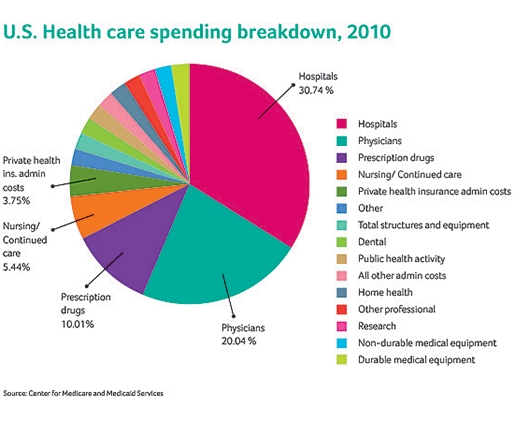
The entire process of health care costs and quality going from $8,000 per person per year to $14,000 removes the definition of the problem from interstate commerce alone involving taxation or penalty; it is a Common Defense problem that is ‘uniform throughout the United States’. An ‘Impost’ is generally defined not only as an imposed ‘overhead cost’ but the original Latin defined it as: “ a member at the top of a wall, pier, or column that supports an arch, from the Latin impositus or placed upon;. The impost was a term that meant it supported a much larger structure by its existence AND DID NOTHING ELSE.

From a clause 1 standpoint, shouldn’t the insurance mandate be a constitutionally valid ‘Impost’ supporting the health care infrastructure rather than a tax or a commercial activity that can be distributed without restriction? In that context, and ONLY that context of Section 8, clause 1 where the Impost cannot be used for any other purpose than health care, the current Anti-Injunction Arguments and the criminal fine argument are not relevant. The issue then becomes whether it is constitutional to have a regulatory system such as the IPAB in law that does not use the collected revenues in a context of a health care Impost ONLY.

 Work in Progress, 2012

Health Care Costs Getting Worse

Total health care costs in the US are about $7000 per person per year.  This is expected to go to $16,000 in 2019, eliminating possible health care for some 35 million people who now have it.  Some other system of insurance, both government and private is needed.  Could this be corrected by a 'Wellbeing Right' in which some healthcare is covered by  a "Governance Impost Credit" that can't be used for anything except the Wellness of Americans?  Show more detail, March 2012

Constitutionally valid Economics in  Health Care?

  • Health Care Industry process:  "Two of the five most profitable industries in the United States — the pharmaceuticals industry and the medical device industry — sell health care. With margins of almost 20 percent, they beat out even the financial sector for sheer profitability.”

    The only reason this happens is that life and death processes are governed by the interstate commerce clause of Article I, Section 8 in the Constitution. Oddly enough, the Constitution never addressed medical processes or health care or insurance or anything relating to wellness simply because in 1787, such were strictly chance processes of Creation. The fact that medical equipment like MRI and CT scanners have 20% margins shows how much things have changed. The Affordable Care Act was developed at a time when 35,000 medical research papers were produced and the technology involved for a $4 million dollar MRI unit was increasing by the month thanks to internet collaboration. But the fact that $8000 per person per year is going to be $17000 per year per person represents a constitutional disaster that comes under Common Defense and not interstate commerce.

    Early preventive care causes as much as $2500 of the overall costs to be 'cure' related rather than 'treatment for life' related, but few in a 'profit only' medical system will opt for a cure; there just isn't any revenue stream in a cure. Is it time for a constitutional convention that guarantees at least fetal, prenatal and adolescence care as a protected Human Right? That is the only way a national system of preventive cures can be setup. It would have to be an enforceable Wellbeing Right that accounts for well-deserved reward for helping others through technology but prevents the obvious (and disastrous) extortion of the unfortunate. Only a We the People right can cure these very complex problems and it would have to account for not just Common Defence but the Preamble covenants of Justice, Tranquility, Liberty and our Posterity.


About This Site

This site is intended to speculate on the dynamics of the US constitution, but especially concerning Wellness.  

Help & Support
All 'this entry is disputed' comments are welcome .
Get in touch

support at: We The People Balance items

Comments concerning constitutional speculations:
constitution_query@earthlink.net